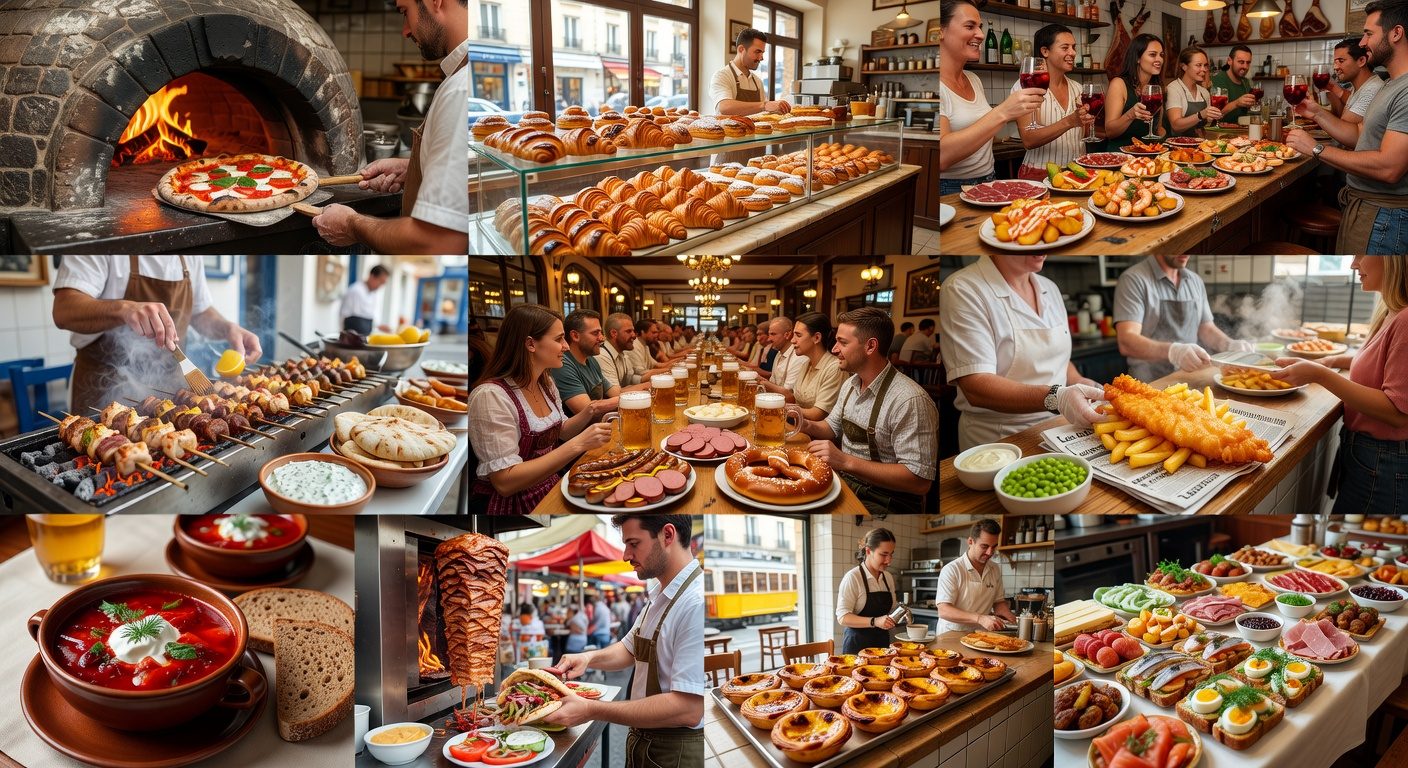
European Street
Food Guide
From London's fish shops to Berlin's currywurst stalls, Europe's street food tells centuries of history in every delicious bite.
From London's fish shops to Berlin's currywurst stalls, Europe's street food tells centuries of history in every delicious bite.
Simple ingredients, centuries of tradition, and unforgettable flavours — Europe's street food scene is deeper than you might think.
Britain's greatest contribution to street food culture — thick fillets of cod or haddock battered and deep-fried to golden perfection, served with chunky chips, mushy peas, and malt vinegar.
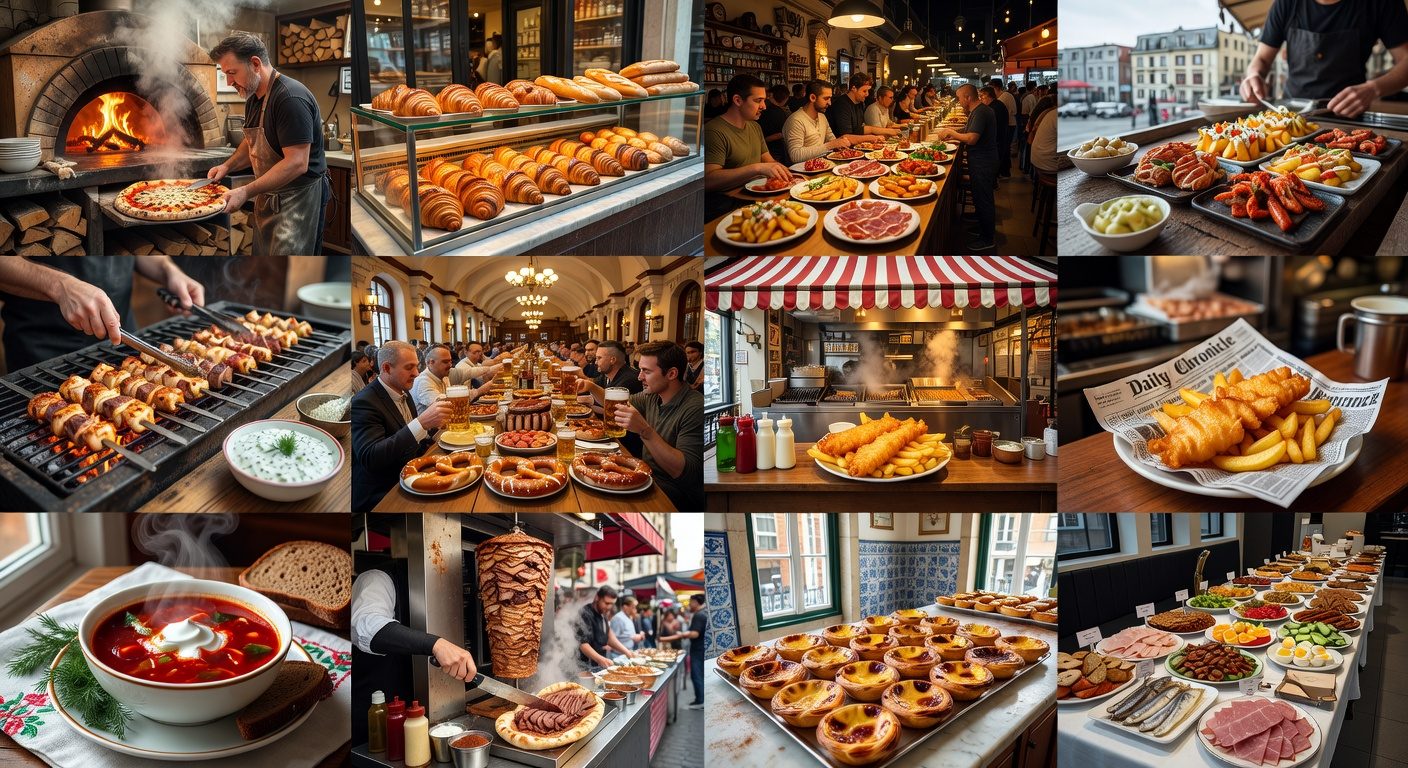
Germany's beloved street sausages span the sublime to the indulgent. Grilled bratwurst with mustard in Bavaria, or Berlin's iconic currywurst — sliced pork sausage smothered in curried ketchup.
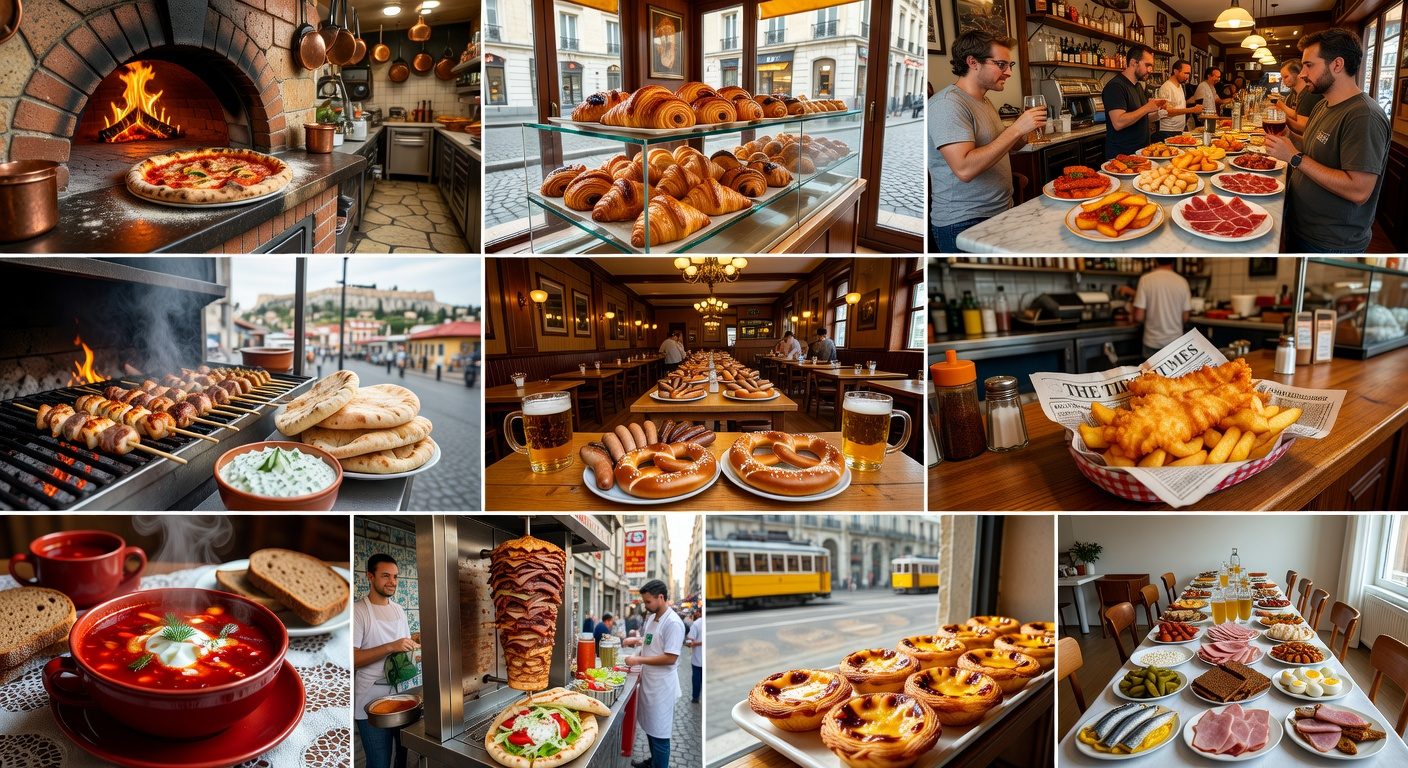
Small skewers of marinated pork or chicken grilled over charcoal, served in warm pita with tomato, onion, tzatziki, and paprika. Greece's original fast food and still its finest.
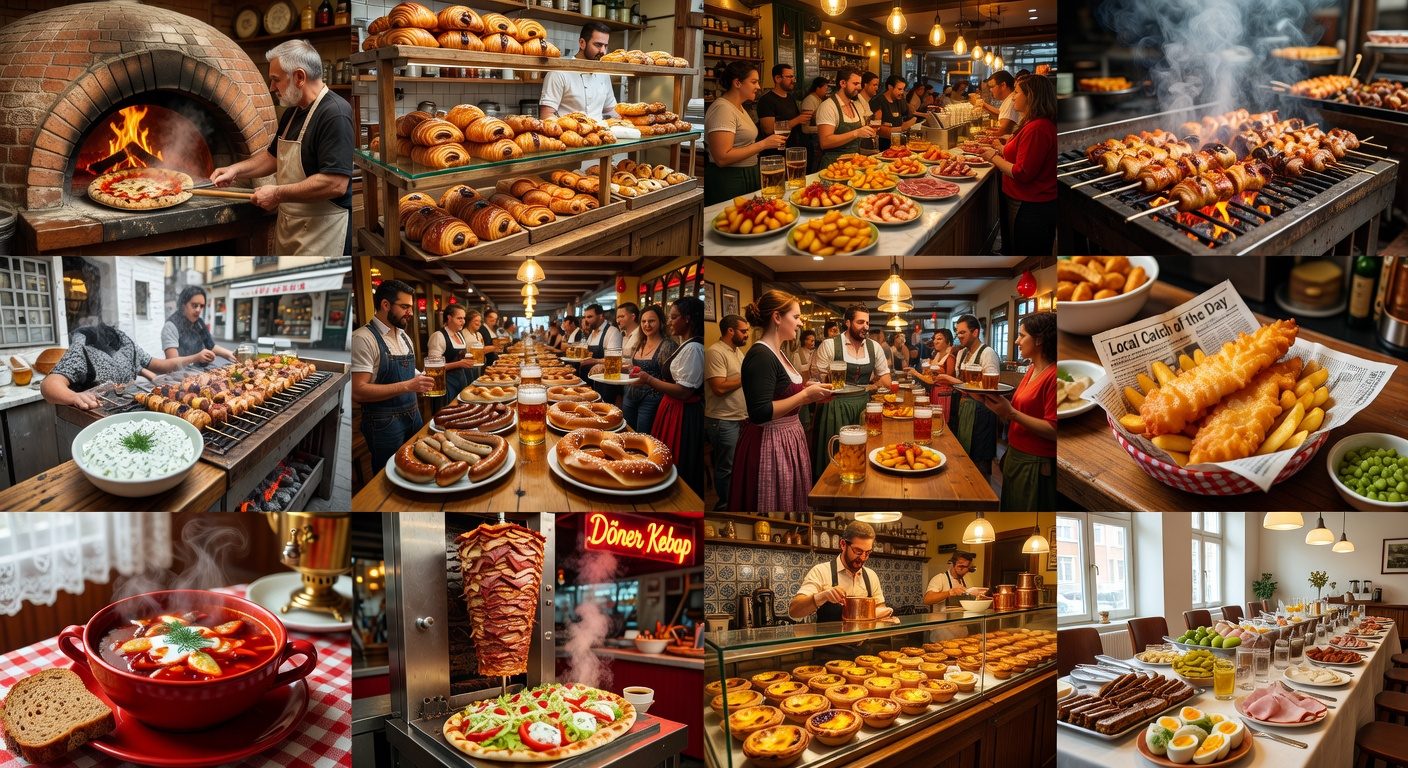
Spain's casual food culture reached its zenith in the tapas bar — small plates of patatas bravas, jamón, croquetas, and anchovies designed to be shared over wine and conversation for hours.
Sweden's legendary buffet tradition translated to street food means open-faced sandwiches laden with gravlax, pickled herring, dill cream cheese, and roe — eaten standing at a market stall.
Thin, lacy crêpes fresh from a hot griddle — with Nutella and banana, or the savoury Breton galette with ham, cheese, and egg — are France's ubiquitous and irresistible street treat.
London's street food scene is one of the most diverse on earth, reflecting its extraordinary multicultural heritage. Borough Market remains the crown jewel — a Victorian cathedral of artisan food vendors serving everything from Scotch eggs to Ethiopian injera.
The city's covered markets and food halls have elevated street food to a fine art, while the East End still hosts legendary pie-and-mash shops and jellied eel stalls that have served Londoners for over a century.
Berlin has arguably done more for street food culture than any other European city. The döner kebab — reinvented by Turkish immigrant Mehmet Aygün in the 1970s — is now one of Germany's most consumed foods. Berlin's currywurst stands serve millions each year.
The city's multicultural Kreuzberg neighbourhood is ground zero for Berlin's street food revolution, where Turkish markets, Vietnamese snack bars, and Lebanese falafel shops sit side by side.
Athens has been feeding people on the street since antiquity. Today, the city's souvlaki culture is deeply embedded in daily life — locals eat it at breakfast, lunch, and midnight with equal enthusiasm.
The Monastiraki neighbourhood offers some of the finest street food in the city, while Varvakios market in the centre sells everything from fresh octopus to cheese by the wheel.
Barcelona's La Boqueria market is one of Europe's most spectacular food experiences — a riot of colour, smell, and sound stretching under a grand iron roof. Grab a fresh croqueta from the vendor who's been there for thirty years.
The city's tapas bars spill onto every street at dusk, when the evening paseo tradition sees Catalans emerge for bites of jamón, grilled pimientos de Padrón, and cold cava.
Stockholm's street food scene has undergone a remarkable transformation over the past decade. The Hötorgshallen and Östermalm Food Hall offer world-class Nordic produce in stunning surroundings, while food trucks serve reindeer burgers and smoked salmon wraps.
The city's kaffekultur means every neighbourhood has its own fika spot — somewhere to stop for coffee and a cardamom bun that doubles as a perfect street snack.
You're subscribed!