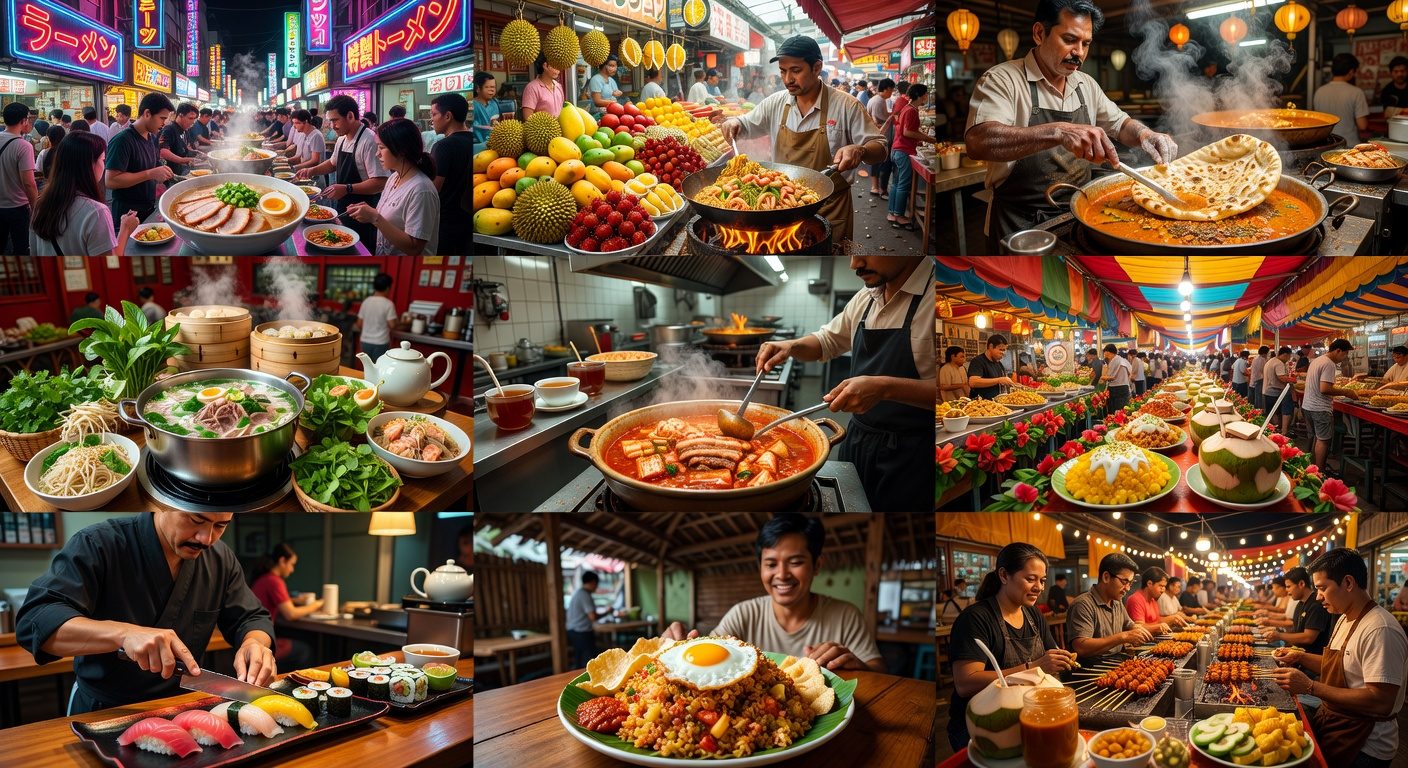
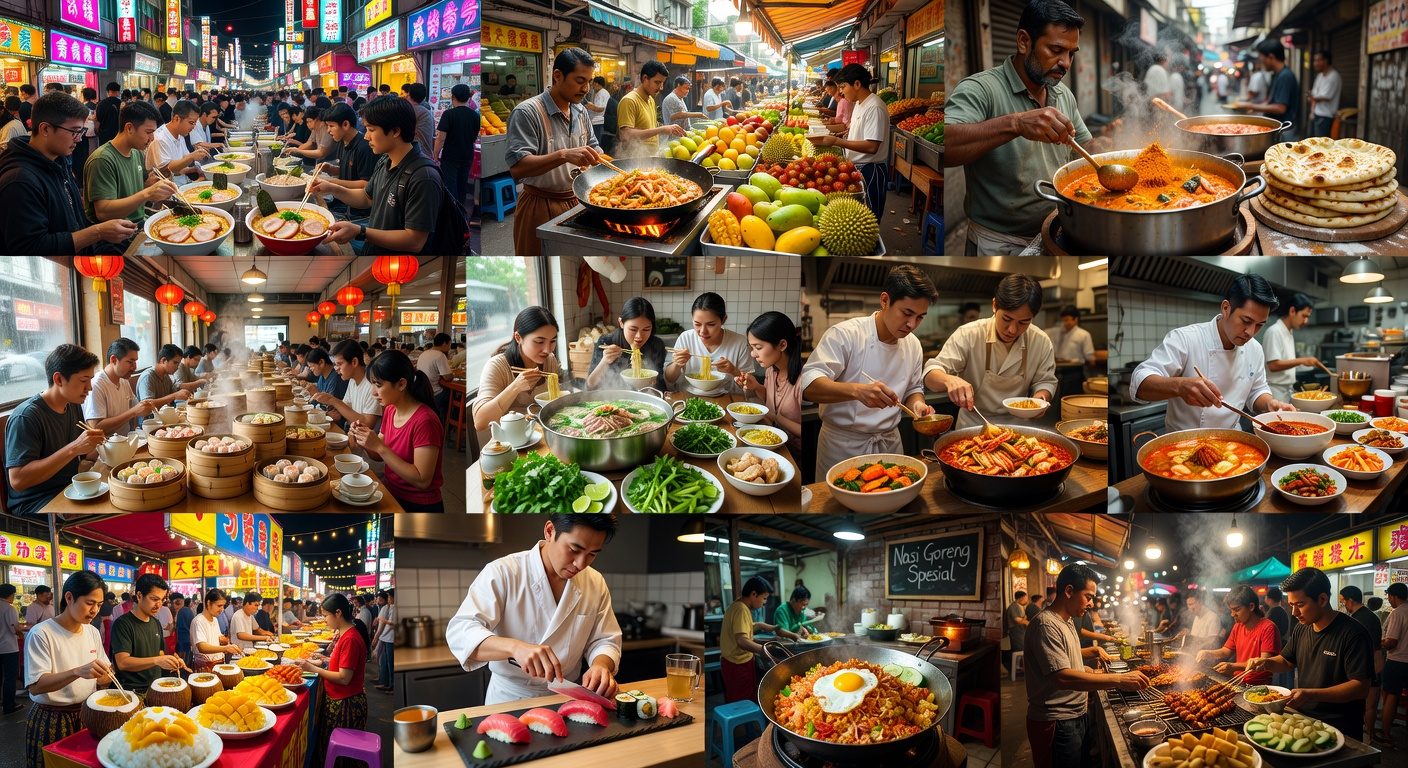
Bold, fragrant, and fiercely alive — Thai cuisine is a symphony of sweet, sour, salty, bitter, and spicy, achieved with fresh herbs and expert technique.
Thai cuisine is defined by the pursuit of balance across five core flavors: sweet, sour, salty, bitter, and spicy. Every dish is a careful negotiation between these forces. A great Thai cook tastes continuously, adjusting fish sauce, lime juice, palm sugar, and chili until perfect harmony is achieved.
Fresh herbs are central — lemongrass, kaffir lime leaves, galangal, Thai basil, and cilantro provide fragrance and depth that no dried substitute can replicate. This is a cuisine of freshness and immediacy, served piping hot from wok to plate in seconds.
Bangkok's street food scene is legendary. From the famous Chinatown (Yaowarat) to the canal-side carts of Khlong San, over 15,000 street food stalls feed millions daily. Michelin has even started awarding stars to Bangkok's most outstanding street food vendors.
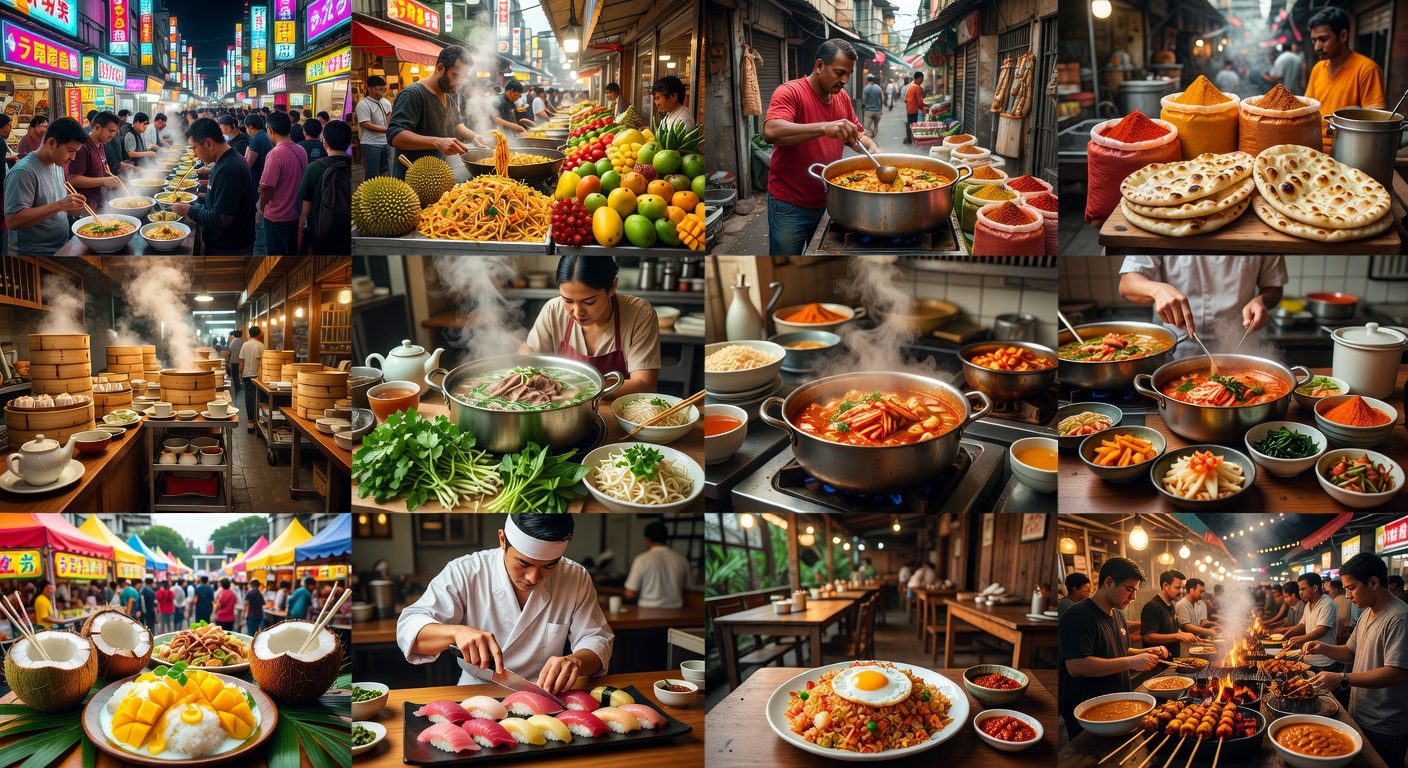
Bird's eye chilies, fresh and dried — heat that builds and lingers
Lime juice, tamarind, and fermented ingredients for bright acidity
Palm sugar — subtle, caramel-like sweetness that rounds flavors
Fish sauce (nam pla) — the umami backbone of Thai cooking
Fresh herbs, bitter melon, and certain leafy greens for complexity

Wok-fried rice noodles with egg, bean sprouts, and tamarind sauce. Simple in concept, extraordinary in execution.

A fragrant paste of green chilies, lemongrass, and galangal simmered in rich coconut milk. The soul of Thai cuisine.

Sweet glutinous rice with fresh Maha Chanok mango and salted coconut cream — Thailand's most beloved dessert.
Bangkok and the central plains produce the dishes most associated with "Thai food" — pad thai, green curry, tom yum.
Influenced by Myanmar and Yunnan — khao soi (curried noodle soup), sai oua (herb sausage), and milder, herbaceous dishes.
The spiciest Thai cuisine — som tum (green papaya salad), laab (minced meat salad), and sticky rice are staples.
Seafood-rich, fiercely spicy cuisine influenced by Malay flavors — crab curry, massaman, and fresh-caught fish.
The "Peranakan" cuisine of Phuket blends Thai and Chinese-Malay influences — mee Hokkien, o-tao (oyster omelet).
Northern Thailand's food capital — browse the famous Night Bazaar for an extraordinary range of local specialties.
Our Asia Street Food guide covers Bangkok's best markets, Chiang Mai's night bazaar, and beyond.
Explore Asian Street Food →